If you’re an alternative lender in 2023 and you’re not running your operation on a SaaS lending platform, you’re missing out big on both time saved and money.
Why?
Automated workflows, real-time data analysis, seamless collaboration, airtight security… the list goes on and on. Once a fantasy, streamlined workflow efficiency is now the norm for alternative lenders using the right software suite.
And yet, if spreadsheets are your norm, there’s a good chance that you might be unfamiliar with this type of modern technology.
To that end, our team of tech and alternative lending specialists at Onyx IQ has put together a list of some common SaaS lending terms. The following glossary will get you ready for your transition to the modern age of lending.
Key Functions and Features
Loan Management Software (LOS + LSS = LMS)
A type of software as a service (SaaS) designed to automate and streamline the entire loan process, from origination to servicing to collections.
Loan Origination (LOS)
The process by which a borrower applies for a new loan, and a lender processes that request.
Loan Servicing (LSS)
The administrative tasks involved in a funding deal, from the time the funds are disbursed until the deal is paid off. Smooth communication between borrower and funder is essential throughout the entire service.
Underwriting
The process of evaluating a borrower’s creditworthiness and risk profile, by analyzing factors such as credit score, financial health, income, debt amount, or other alternative data sources. The result determines the loan terms and conditions. Although LOS automates several tasks, a human touch is usually necessary to produce the best results in this stage of the lending workflow.
Portfolio Management
Strategically managing a group of investments (in this case MCA fundings), in a manner that aims to highlight trends, maximize returns and minimize risk.
Collections Management
Recovering funds from borrowers who have missed payments.
Collections activities can take the form of internal (“soft”) collections or be outsourced to a law firm or agency for 1st Party collections (i.e., calling on behalf of the funder) or 3rd Party collections (“hard collections,” calling on behalf of the agency).
Collection activities may be a combination of SMS, email, phone calls, or even chat. Collection activity outcomes can result in healthy, modified, or even defaulted deals.
Disclosure Workflow
An automated process where the funder populates and sends the state specific documentation needed prior to sending a merchant agreement.
Workflow Automation
The systematized execution of predefined tasks involved in loan management. This type of automation drastically reduces manual effort, streamlines operations, increases accuracy, and enhances efficiency in the deal approval, disbursement, and repayment processes.
Workflows can be automatized almost anywhere within lending/funding, for processes such as application, underwriting, servicing, and collections.
Syndication Management
The ability to create unique syndicator profiles, billing and repayment schedules and invite those syndicators to participate on fundings. True syndication management also incorporates the ability for a syndicator to log into a unique portal to access deals and reports.
ISO/Broker Management
Creating and managing brokers within the LMS, so that funders can associate them with specific deals, and pay out commissions.
Optical Character Recognition (OCR)
A technology that converts information within printed (physical or digital) documents into text that can be searched, processed, and edited. Specifically in MCA, OCR refers to the ability to read and translate bank statements within a matter of seconds to be incorporated in underwriting and decisioning.
Decision Engine
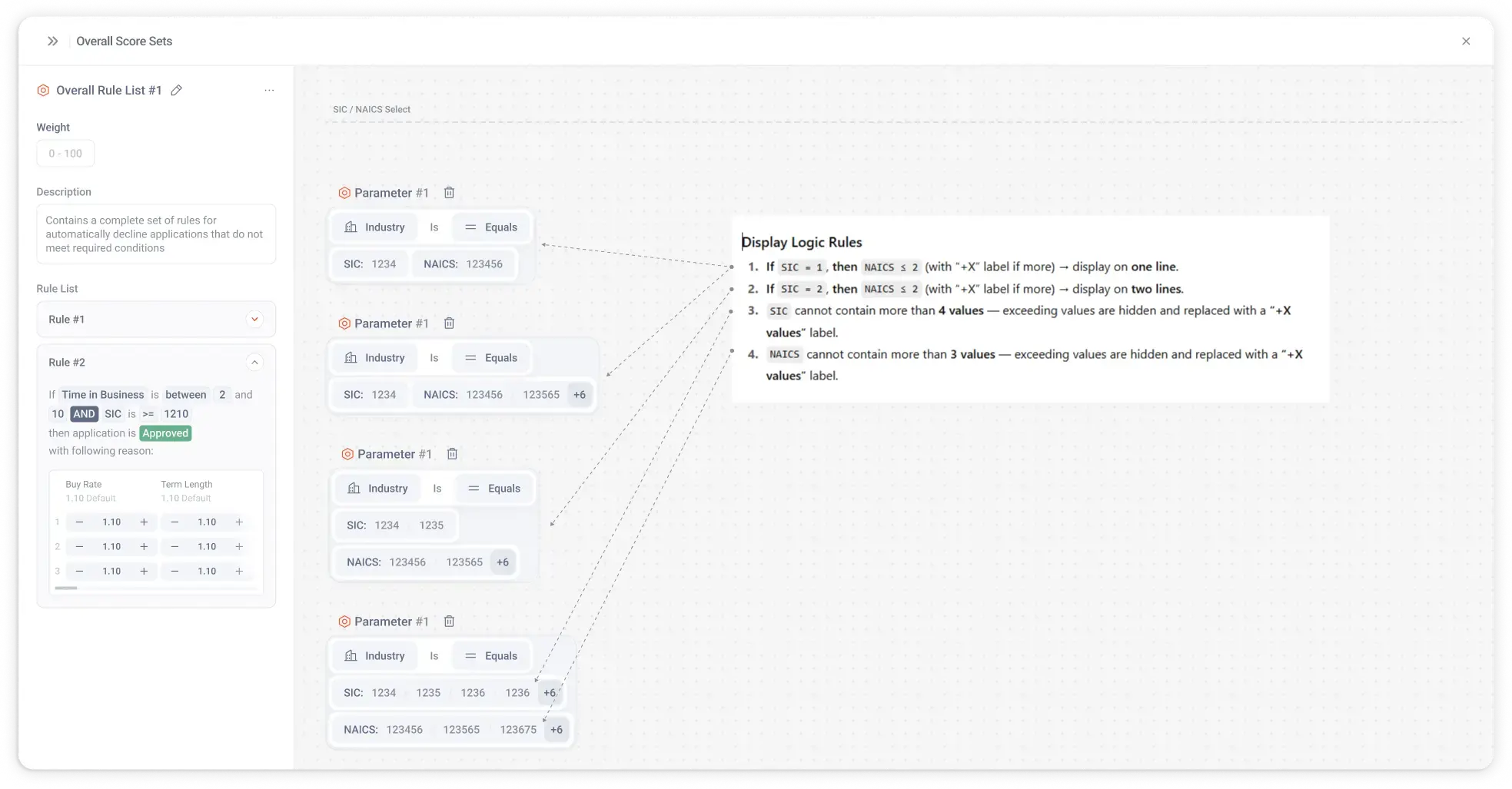
A customizable rules-driven solution that can produce proprietary scores and/or automated decisions, based on predefined rules created by the funder. This is typically used when analyzing risk during underwriting.
System Integration and Interaction
Data Integration
The process of accessing data from third party providers directly in the LMS in order to facilitate a better user experience as well as data analysis and decision making (e.g., bank verification data).
Application Programming Interface (API)
A “faceless” piece of software, with no user interface, that allows two or more software programs to interact with each other. In other words, an intermediary for other software to work together.
Third-Party Integrations
External software tools (from third-party vendors) that link into a primary software via APIs, to enhance and optimize processes. Onyx IQ has several third-party integrations in place, such as DecisionLogic, DocuSign, and Thomson Reuters CLEAR.
Customer Relationship Management (CRM)
A system for managing a company’s interactions with current and potential customers (e.g., Salesforce).
Delivery Model and Capabilities
Software as a Service (SaaS)
A software licensing and delivery model in which a software platform is accessed online via a subscription, rather than installed on individual computers. SaaS platforms are generally cloud-based—the most well-known cloud providers are Amazon Web Services (AWS), Microsoft Azure, and Google Cloud (GCP).
Platform Customization
The ability to modify a software platform to meet the specific needs or preferences of a user or business. While this typically requires the software provider to make the changes by writing code, many customizable platforms are also configurable, meaning users can make changes on the platform themselves with simple point and click tools.
White Label Platform
A SaaS platform that can be modified to match the branding of any customer’s company for a seamless end customer experience.
Real-Time Reporting
Delivering data and information continuously as it is collected—”in real time”— without any delay.
Templates
Pre-designed documents made available in the software. Templates allow users to simply select the document to be sent (e.g., merchant agreement) and allow the system to populate all necessary data points and send the document accordingly. Onyx IQ offers a number of templates, such as disclosures, merchant agreements, funding summaries, payoff letters, emails, and SMS.
Data Migration
Transferring data from one system or format into another. For example, users can transfer historical data from a previous loan management software or from regular spreadsheets to Onyx IQ.
Change Management
A structured approach to transitioning individuals and organizations (including processes, policies, workflows, etc.) from one software platform to another.
User Experience
User
The person who uses or operates a specific software product. User types vary, and SaaS platforms are designed to give different users different platform permissions, according to what their tasks are.
User Interface (UI)
The point of interaction between the user and a software product. This includes all the screens, pages, buttons, and all other visual elements.
Security and Compliance Management
Data Security
Measures taken to protect digital data from nefarious actors, unauthorized users, and unexpected events—a plan for every scenario.
Data Encryption
A security method where information is encoded into a format that only authorized parties can access. It uses an algorithm to transform plain text information into a non-readable form, or ciphertext, which helps protect sensitive data from unauthorized access or potential breaches.
Firewall
A network security system that monitors and controls incoming and outgoing network traffic based on predetermined security rules.
Transport Layer Security (TLS) Protocol
A protocol that ensures privacy between a software platform and their users, when accessed via a web browser.
Multi-Factor Authentication (MFA)
A security measure that requires more than one method of authentication (e.g., a unique code sent via SMS or email in addition to a user’s password) for a single login or transaction, to verify the user’s identity.
Compliance Management
Ensuring that a company and its employee’s activities adhere to the laws, regulations, standards, and ethical practices that apply to its business.
Penetration Test
Also known as pen test, is a controlled and simulated cybersecurity assessment conducted on a software platform, network, or application to identify vulnerabilities and weaknesses.
Vulnerability Scan
An automated process that assesses software platforms, networks, or applications to identify potential security weaknesses, such as outdated software, misconfigurations, or known vulnerabilities.
Service Organization Control (SOC) 2 Type II
A widely recognized auditing standard that reports how well a company protects and manages customer data. It’s particularly relevant for software companies that handle sensitive customer information and/or provide cloud-based services. Audits are typically performed by external parties or auditors at which point a comprehensive report is delivered to the SaaS provider.
Optimize Your Lending With Onyx IQ
What do all alternative lending and funding organizations have in common in 2023?
They all need a SaaS lending platform.
Who, what, and how they fund/lend might differ, but agile technology must be at the heart of each of their operations.
Having the right technology isn’t quite enough though—you need to know what it entails and how it is powered. And for that, it’s essential to intimately understand the vocabulary and concepts of modern lending.
Now you have this glossary to guide you, and help you make the most of the SaaS lending platform that works best for your organization.
Keep in mind that these are just the basics—contact us to learn more, or to request a demo of Onyx IQ to see the platform in action.