If you’ve ever waited on missing docs, chased a stray bank statement, or rebuilt a deal history from scattered notes, you know how manual lending slows decisions and opens the door to avoidable errors. In 2026, these stepbacks become a competitive liability.
This is why alternative lenders are shifting toward automated lending platforms.
Automation is no longer an efficiency upgrade: it’s the operating standard for organizations that want to scale without inflating headcount, missing early warnings, or compromising compliance in the process.
Underwriting Breaks First Because Manual Work Multiplies With Volume—And Teams Can’t Outrun It
Slow, manual underwriting creates delays lenders can’t afford
Underwriting built on email threads, scattered checklists, and individual judgment slows decisions and creates uneven results.
Files sit. Logic drifts. Small gaps turn into exposure. Automated underwriting doesn’t replace the underwriter, but rather removes the repetitive steps so they can make faster, cleaner calls.
Fragmented servicing and collections turn small errors into margin loss
When servicing and collections are split across multiple systems—ACH processors, CRM tools, servicing portals, and internal trackers—information doesn’t flow cleanly.
Operators spend more time reconciling conflicting sources of truth than managing portfolio performance, and minor inconsistencies become expensive over time.
Manual compliance and disclosures are too risky in a multi-state environment
Every new state rule adds another point of failure. Templates get outdated, which causes steps to be missed. One incorrect disclosure can create downstream issues few lenders are prepared to handle manually.
Three Core Lending Workflows Every Lender Should Automate by 2026
Every lender operates differently, but the same workflows slow teams down.
Not because operators lack discipline, but because the process wasn’t built for the volume and regulatory pressure lenders face today.
Automation stabilizes the parts of lending that decide cycle time, consistency, and margin.
1. Intake: Pipeline moves faster when underwriters stop chasing missing pieces.
Most delays don’t come from underwriting—they come from what arrives before underwriting even begins, from incomplete or inconsistent intake.
Missing statements. Incomplete forms. Documents that don’t match what brokers promised.
Operators start with complete files instead of chasing missing pieces. Underwriting begins sooner, and decisions move faster because the foundation is solid.
Clean intake is the first step toward a faster pipeline.
2. Underwriting: Decisions stay consistent when judgment sits on a stable foundation
Underwriting breaks when the process depends on memory, email threads, or operator bias. Two operators reviewing similar deals can make completely different calls when the process relies on memory and personal judgment.
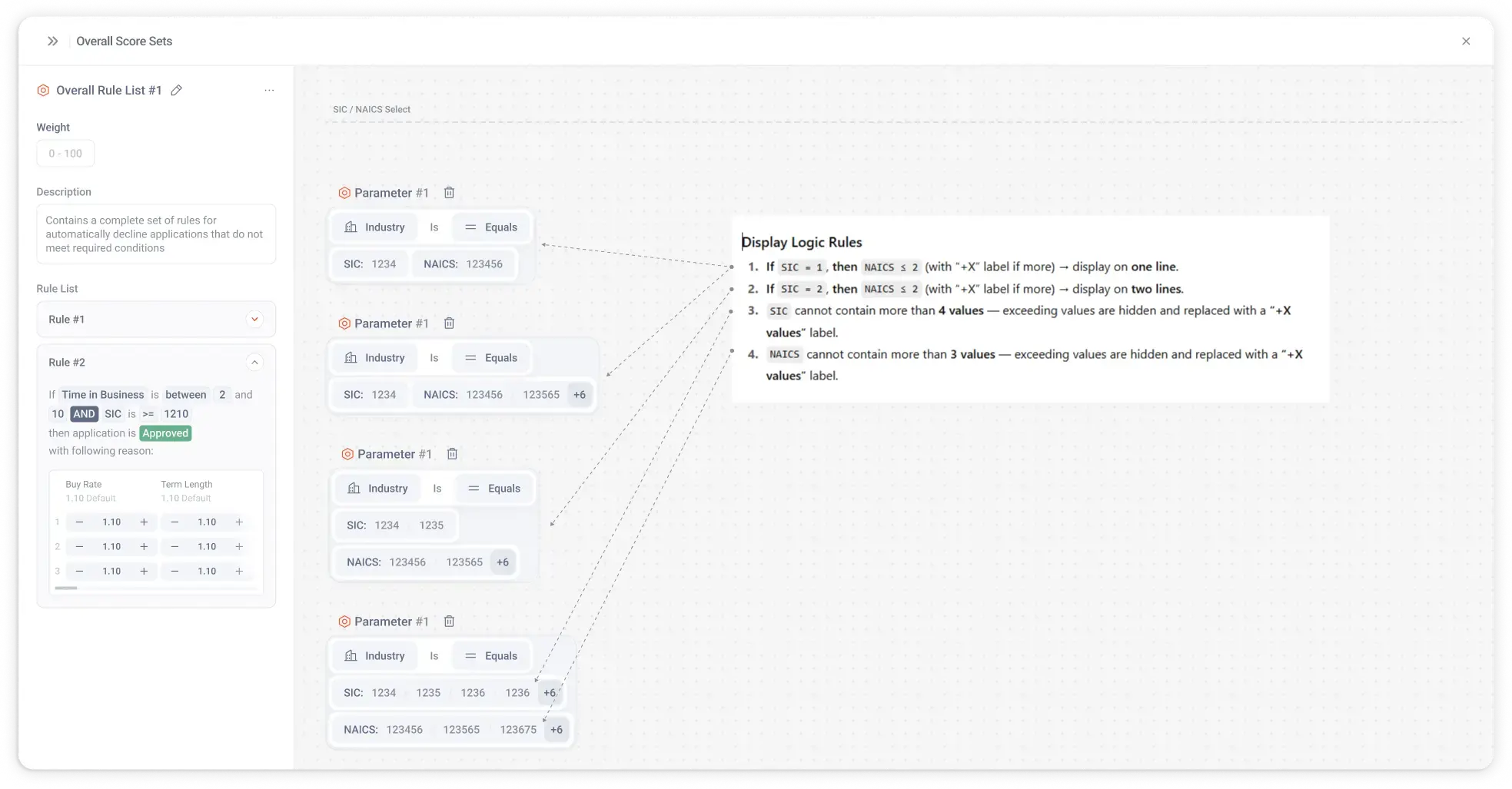
Automated underwriting applies your credit logic the same way every time.
Exceptions surface early, judgment becomes clearer, and decisions hold up under internal review because they follow a stable standard.
3. Servicing & Collections: Margin stays intact when issues surface early—not after the quarter closes
Most losses originate after funding, when small servicing gaps go unnoticed. Late remits, mismatched ledgers, and missing notes compound quietly until an account becomes difficult to recover.
Automated servicing & collections keeps payments, schedules, and account history aligned in one flow, so issues appear early instead of weeks later. Operators get ahead of problems rather than reacting once the margin is already gone.
Unified Lending Ecosystems Outperform Fragmented Stacks Because Rework Disappears
Manual fixes can keep a lending operation running, but they can’t keep it scalable.
As volume rises, the real advantage isn’t looking for multiple tools to close operational gaps, but investing in an end-to-end loan management platform where every workflow runs from the same source of truth.
A unified ecosystem removes the friction that slows operators down and replaces it with predictable, connected execution across the entire lifecycle.
Unified Workflows Keep Deals Moving Because Operators Stop Rebuilding Context
In a unified environment, intake, underwriting, servicing, and collections operate on the same record.
There’s no recreating deal history, no reconciling two versions of the truth, no rebuilding context when a file changes hands.Operators stay focused on decisions instead of recovering from disconnected steps.
Real-Time Visibility Strengthens Control and Oversight
When information updates instantly across the entire workflow, issues surface earlier.
Risk teams see patterns sooner. Servicing teams act faster. Leadership reviews cleaner, more reliable data without waiting for manual reporting cycles.
A unified system gives lenders the operational visibility they need to stay ahead—not catch up.
Automation Works Best When the System Is Connected
Automation inside a fragmented stack only accelerates the chaos.
However, automation inside a unified loan management system removes it.
When every workflow runs from the same record, rules apply cleanly, updates stay aligned, and operators stop carrying the system on their backs.
Scaling operations becomes a workflow outcome, not a staffing decision.
Onyx IQ Was Built To Give Lenders One Unified, Automated Platform For The Work That Actually Decides Performance
Onyx IQ was designed with one goal: give lenders a single system that keeps every workflow aligned—intake, underwriting, servicing, and collections—without relying on manual stitching or external tools. Instead of automating isolated tasks, we focused on automating the flow, so decisions, updates, and exceptions stay connected.
In this unified environment, your credit logic runs the same way every time, and every change carries through the lifecycle automatically. Operators open a file and see the full story—documents, notes, remits, and risk signals—without piecing together information from multiple systems.
As volume rises and compliance pressure increases in 2026, this structure becomes the difference between scaling cleanly and getting slowed down by operational drag. Onyx IQ provides the base that keeps workflows fast, consistent, and auditable at every step.
Lending Automation is a Non-Negotiable for 2026
Manual workflows can keep a team running, but they can’t keep it competitive.
As volume increases and requirements expand, the lenders who scale are the ones with clean, connected systems—not the ones adding more tools or more headcount.
That’s why leading MCAs and alternative lenders are using Onyx IQ to run intake, underwriting, servicing, and collections in one unified environment. They’re funding more deals with fewer slowdowns, catching issues earlier, and giving their teams the visibility they never had in a fragmented stack.
If you’re ready to move your operation into a unified model, we can show you exactly how it works.
See how Onyx IQ can run your full lending workflow. Book a walkthrough.
Automated Lending Platforms FAQ:
What is an automated lending platform?
An automated lending platform is a unified system that runs intake, underwriting, servicing, and collections with rule-driven workflows instead of manual steps. It keeps data, documents, and decisions connected so teams can move faster, stay consistent, and maintain real-time visibility across the entire lifecycle.
What are the benefits of an automated lending platform?
It shortens cycle times, improves decision consistency, reduces rework, and surfaces issues earlier. Teams handle more volume without expanding headcount, and compliance becomes easier because every step runs on a single, auditable record rather than scattered systems.
Which workflows should lenders automate when moving to an automated lending platform?
Most lenders start with intake, underwriting, and servicing. Clean intake reduces early friction, automated underwriting keeps decisions consistent, and automated servicing catches issues before they become losses. These three workflows create the foundation for reliable scale.