Lending operations don't usually measure how much time disappears between the moment a submissions rep finishes a file and the moment an underwriter actually starts evaluating it.
In most shops, those two things happen in different systems. Origination lives in one place, and underwriting lives in another. And the handoff between them—the export, the re-entry, the re-attachment of documents, the notification to the underwriting team—is just part of the job. Nobody tracks it or questions it. It's just how deals move.
The problem is that every time a deal crosses that boundary, it gets rebuilt, and a rebuilt file isn't the same as the original. It's a copy—carrying whatever data transferred cleanly and missing whatever context didn't make it across.
When origination and underwriting run on the same platform, that rebuild doesn't happen. The deal moves forward as one continuous record. Here's what that actually looks like in practice—and what it means for your team.
Why the Handoff Keeps Costing You
When origination and underwriting are on separate systems, every deal gets entered twice. Once when the submissions rep builds the application, and again when that application has to exist in the underwriting platform.
That double-entry is tedious and usually where errors get introduced. A revenue figure gets transposed, a document gets attached to the wrong field, a business name gets spelled two different ways across two systems. Small things, but small things in an underwriting file affect credit decisions.
The bigger cost is what gets left behind when the deal crosses systems. For example, the ISO communication thread—every document the broker sent during intake, every clarification, every back-and-forth with the submissions rep—stays in the origination system. The underwriter opens a file with no record of any of it. If a question comes up during review that origination already answered, someone has to go find that answer again. In a different system. In a different inbox. Or not at all.
The double-entry gap means your underwriters are making credit decisions on incomplete information every single day.
What Happens When Both Stages Run in a Connected and Automated System
When the submissions rep finishes processing a deal in an end-to-end lending platform like Onyx IQ, they route it to underwriting with a single action—inside the same platform, on the same record. Nothing is exported or re-entered. The deal doesn't cross a system boundary because there isn't one.
The complete origination record moves forward with the deal. The populated application, every document, the ISO communication thread, the credit data, the bank verification, the scorecard result—all of it is already there when the deal lands in the underwriting queue, because it was all built on the same record from the moment the submission arrived.
When the deal appears in the queue, it's already waiting to be evaluated.
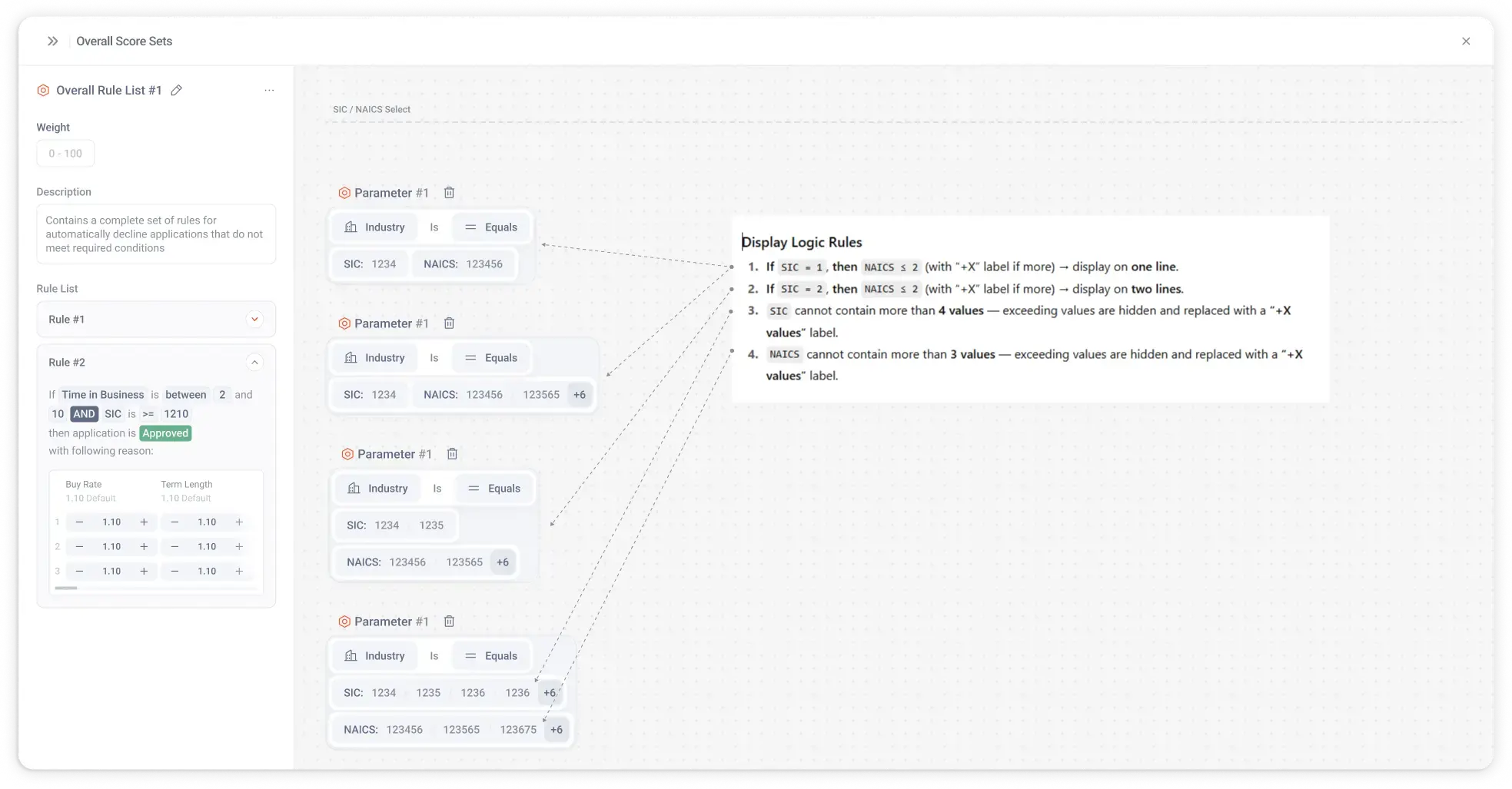
In Onyx IQ, for example, when the underwriter claims the deal, the underwriting tab opens locked to that analyst, and what they see is the full origination record—intact. The application is already populated, the credit report is already pulled, and the bank analysis is already there. The scorecard has already run and flagged the outcome. The ISO communication thread from intake is attached to the file—every exchange, every document request, every clarification the broker sent. Default stipulations are already on the approval.
The underwriter doesn't have to verify anything that origination already captured. They don't have to call the submissions rep to ask what the ISO said about that discrepancy in month three or re-pull a credit report that should have already been there.
They just open the file and start underwriting.
What This Changes for Your Team Day to Day
Your underwriters spend their day underwriting instead of preparing to underwrite. That's the benefit, and it's bigger than it sounds.
Right now, a meaningful chunk of every underwriter's shift goes toward getting a file ready to evaluate—verifying the application is complete, chasing missing context, confirming data that the origination system should have handed over cleanly. When files arrive complete and intact, that work disappears.
The same underwriter handles more deals in the same shift because the files stopped arriving broken.
That's what Caleigh Toye from Liquify Funding was describing:
"We're handling more volume with the same team, funding more deals, and cutting underwriting time by roughly 30%. Everything now runs in one system instead of spreadsheets, and deals move without stalling."
His team didn't change, the files changed, and the result was 30% faster underwriting and more funded deals every month.
Running origination and underwriting in the same platform means:
- You can grow deal volume without your next hire being a submissions rep hired just to manage the handoff.
- Every decision your team makes is based on the actual origination record—not a partially rebuilt version of it.
- You're funding more deals with the team you already have before you need to think about adding to payroll.
When a compliance review comes in or an investor asks about a specific decision, the answer is already in one place too—the origination data, the ISO thread, the scorecard result, the underwriter's decision, all on the same file, all traceable without assembling anything after the fact.
Onyx IQ: One Record From First Submission to Final Decision
Onyx IQ is a full-cycle lending platform built specifically for MCA and alternative lenders. The connected origination-to-underwriting workflow above isn't a special configuration—it's just how the platform works.
Every deal enters at origination and moves through underwriting, funding, servicing, collections, and portfolio management as one continuous record. There’s no need for migration between modules or reconciliation between what origination captured and what underwriting receives. No need for version drift between the file the submissions rep built and the file the underwriter evaluates either.
Ask yourself: what does your underwriter actually see when they open a deal today? If the answer involves anything they have to rebuild, re-pull, verify, or find in a different system—that's exactly the gap Onyx IQ closes.
See What Your Deals Look Like When Origination And Underwriting Share A Record.
Every deal your submissions rep routes across a system boundary adds time between submission and decision—and strips context the underwriter needs to evaluate it accurately.
Book a walkthrough with the Onyx IQ team and we'll show you what a deal looks like when it arrives in the underwriting queue already complete, already evaluated, and ready for a credit decision the moment the underwriter opens it.